Classificação óptica com inteligência artificial – o futuro já chegou.
Jun 08, 2026
A inteligência artificial está transformando todos os setores em que atua, e a triagem óptica não é exceção. O mercado global de classificadores de cores com IA atingiu US$ 0,61 bilhão em 2025 e a projeção é de que cresça para US$ 1,20 bilhão até 2035, apresentando uma taxa de crescimento anual composta (CAGR) de 7,1% durante o período de previsão.Quase 41% desse crescimento é impulsionado por sistemas de triagem de grau alimentício, refletindo uma mudança acelerada da inspeção manual para a precisão baseada em IA.
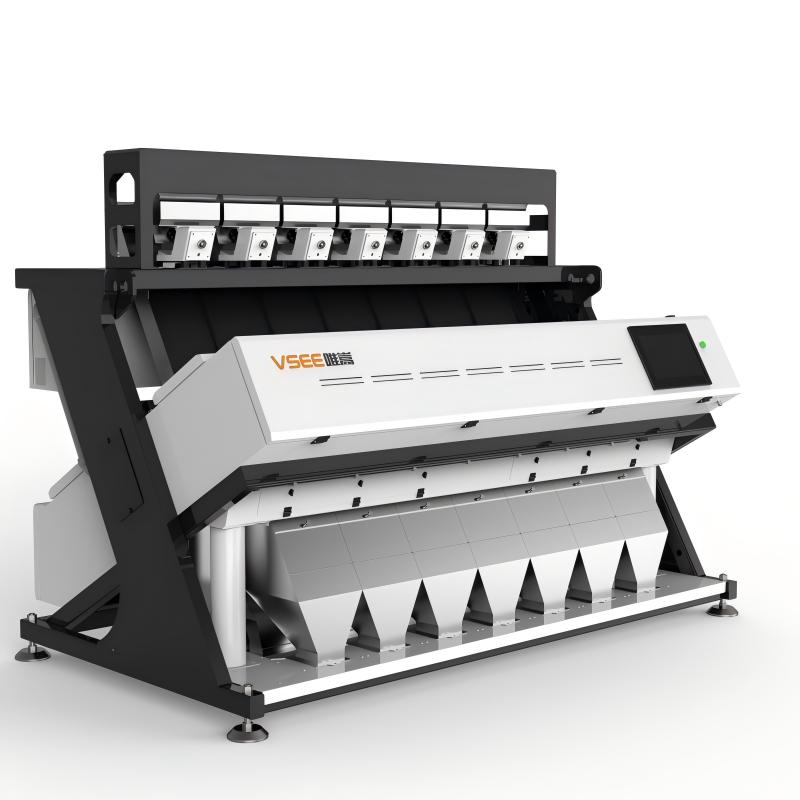
Então, o que faz umclassificador de cores por IAO que é diferente da tecnologia de classificação tradicional? Os sistemas tradicionais dependem de algoritmos fixos — se você programa uma máquina para reconhecer uma amêndoa "boa" como tendo uma faixa de cores específica, qualquer coisa fora dessa faixa é rejeitada. Mas o que acontece quando sua matéria-prima varia naturalmente? Os sistemas convencionais têm dificuldades com a inconsistência e exigem recalibração frequente.
Sistemas de classificação com inteligência artificial resolvem esse problema usando técnicas de aprendizado profundo, particularmente Redes Neurais Convolucionais (CNNs) e Transformers, que superam drasticamente os algoritmos convencionais de processamento de imagens. Ao contrário dos sistemas tradicionais que buscam simples limiares de cor, os modelos de IA analisam múltiplas dimensões simultaneamente — cor, forma, textura e características da superfície — aprendendo com cada ação de classificação para aprimorar continuamente a precisão ao longo do tempo.
Para empresas dos setores agrícola, de processamento de alimentos e de reciclagem, a mensagem é clara: a triagem óptica com inteligência artificial oferece maior precisão, menor desperdício e maior eficiência operacional do que os métodos tradicionais. A tecnologia é madura, comprovada e está se expandindo rapidamente em todo o mundo. Quem a adotar cedo liderará seus mercados; quem demorar corre o risco de ficar para trás.


 CN
CN português
 English
 français
 русский
 español
 ไทย
ไทย Indonesia
 Tiếng việt
 العربية
 فارسی
فارسی




 SUPORTADO POR REDE