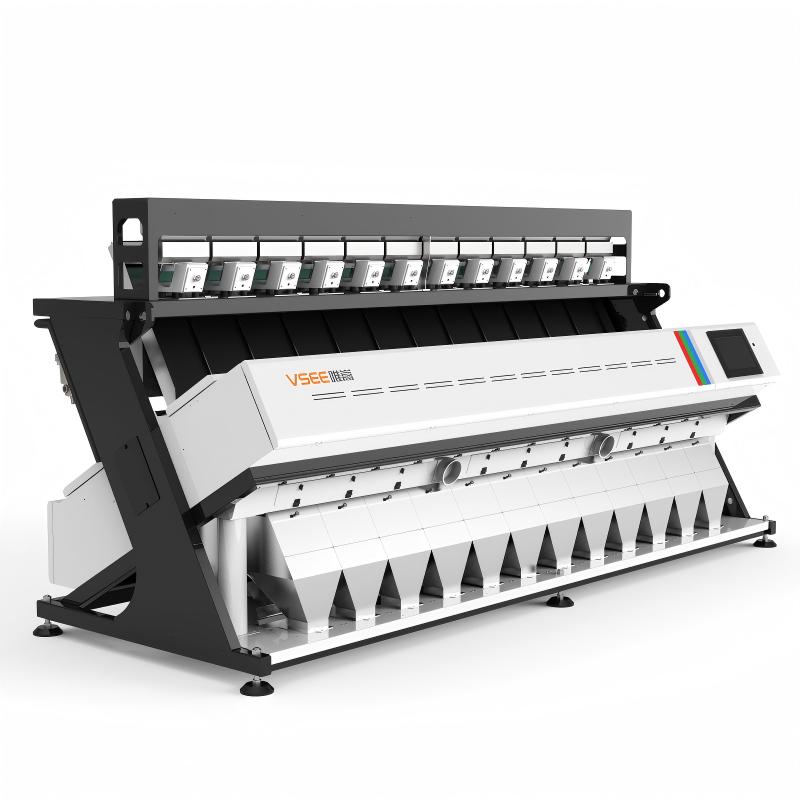
As modernas fábricas de processamento de arroz dependem muito de máquinas de classificação de arroz por cor para garantir arroz de alta qualidade e aparência uniforme. Ao usar sensores ópticos, câmeras de alta velocidade e software inteligenteEssas máquinas conseguem detectar e remover grãos defeituosos, materiais estranhos e arroz descolorido automaticamente. Este artigo explica, passo a passo, como funciona uma selecionadora de cores de arroz, tanto para iniciantes quanto para profissionais da área.
Etapa 1: Alimentação com arroz
O processo começa com a alimentação da máquina com arroz, utilizando alimentadores vibratórios ou funis de gravidadeO objetivo é criar um camada única e uniforme de grãos de arroz Para uma digitalização ideal. A alimentação irregular pode causar identificação incorreta ou a não detecção de grãos defeituosos.
Pontos principais:
- O fluxo adequado de arroz é fundamental para a precisão.
- Os alimentadores ajustáveis permitem o processamento eficiente de diferentes variedades de arroz.
- A pré-limpeza do arroz para remover detritos grandes melhora o desempenho.
Etapa 2: Iluminação
Assim que o arroz entra na seção de triagem, ele é iluminado por potentes lâmpadas LED ou halógenas.A fonte de luz aumenta o contraste entre os grãos normais e os defeituosos, permitindo que o sistema de câmeras detecte diferenças sutis de cor, tamanho ou forma.
Pontos principais:
- A iluminação LED reduz o calor e o consumo de energia.
- Uma iluminação adequada evita rejeições falsas.
- Algumas máquinas avançadas utilizam múltiplos ângulos de iluminação para obter maior precisão.
Etapa 3: Detecção Óptica
O Câmeras CCD ou RGB O sistema analisa cada grão de arroz individualmente em velocidades extremamente altas. diferenças de cor, forma e tamanhoClassificadores avançados com inteligência artificial também podem identificar grãos esbranquiçados, amarelados, pretos ou quebrados, que são difíceis de detectar com sistemas convencionais.
Pontos principais:
- Câmeras de alta resolução aumentam a precisão da triagem.
- Os algoritmos de IA reduzem erros e rejeições falsas.
- Várias câmeras por faixa melhoram a produtividade.
Etapa 4: Identificação de defeitos
Usando processamento de imagem em tempo realO software classifica os grãos em categorias aceitáveis e defeituosas. Os defeitos podem incluir:
- Grãos descoloridos (amarelos, pretos ou esbranquiçados)
- Arroz quebrado ou em pedaços
- Materiais estranhos como pedras ou cascas
- Grãos danificados por insetos ou mofados
Máquinas avançadas também conseguem diferenciar entre defeitos menores e defeitos críticos, garantindo a máxima qualidade do arroz e minimizando o desperdício.
Etapa 5: Ejeção de grãos
Uma vez identificados os grãos defeituosos, jatos de ar comprimido ou atuadores mecânicos Eles são removidos do fluxo principal. O arroz restante de alta qualidade segue rio abaixo para embalagem ou beneficiamento.
Pontos principais:
- O momento preciso da ejeção é essencial para evitar a remoção de grãos de boa qualidade.
- A pressão de ejeção ajustável garante a remoção adequada dos grãos defeituosos sem danificar os grãos saudáveis.
- Múltiplas pistas aumentam a capacidade da máquina sem reduzir a precisão.
Etapa 6: Coleta e Saída
O arroz selecionado é recolhido em recipientes separados:
- Arroz aceitável Vai para a linha de embalagem ou para processamento posterior.
- Grãos rejeitados São recolhidos separadamente para reciclagem ou descarte.
Essa separação garante que apenas arroz de alta qualidade chegue aos consumidores, melhorando a reputação da marca e seu valor de mercado.
O Máquina de classificação de arroz por cor VSEE A tecnologia combina sensores ópticos, câmeras de alta velocidade e software com inteligência artificial para oferecer uma triagem precisa, eficiente e confiável. Ao compreender o processo passo a passo — da alimentação, iluminação, detecção óptica, identificação de defeitos, ejeção à coleta final — os processadores de arroz podem otimizar a produção, reduzir o desperdício e melhorar a qualidade geral do produto.
Para obter mais informações sobre as máquinas de classificação de arroz por cor da VSEE e outras soluções de classificação, visite: www.ahvsee.com


 CN
CN português
 English
 français
 русский
 español
 ไทย
ไทย Indonesia
 Tiếng việt
 العربية
 فارسی
فارسی



 SUPORTADO POR REDE