Na cadeia de suprimentos alimentares global atual, um único produto defeituoso pode prejudicar a reputação da marca, desencadear recalls dispendiosos ou causar a rejeição de um contêiner inteiro. Para processadores de arroz, nozes, sementes, grãos e até mesmo materiais reciclados, alcançar pureza quase perfeita não é mais um luxo — é um requisito básico.
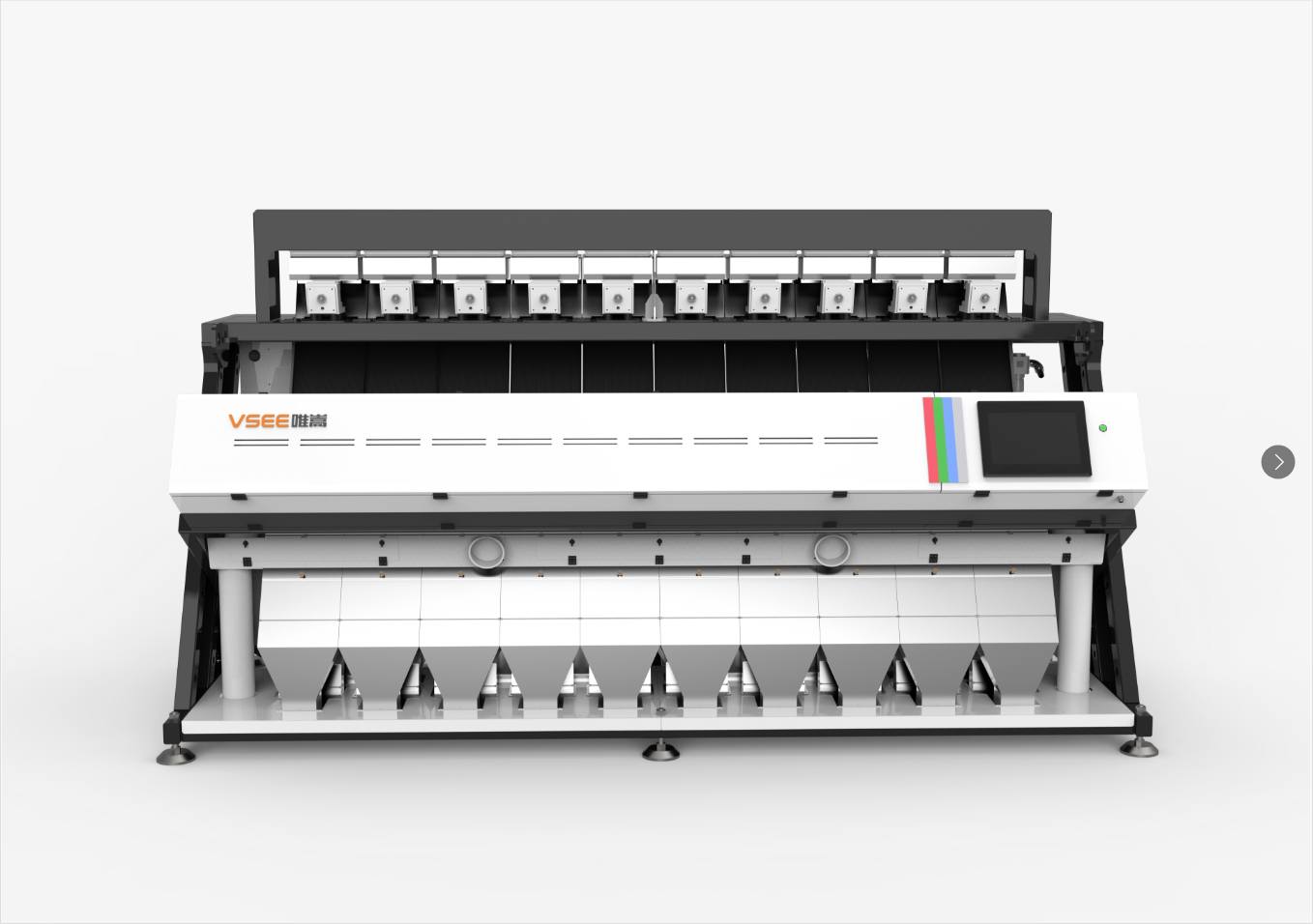
Entre noclassificador óptico de coresUma máquina de alta velocidade, alimentada por inteligência artificial, que enxerga o que o olho humano não consegue. Combinando câmeras avançadas, iluminação de precisão e sistemas de ejeção inteligentes, as modernas classificadoras de cores removem defeitos, materiais estranhos e produtos com cores fora do padrão a taxas de várias toneladas por hora. Este artigo explora em detalhes como a tecnologia de classificação de cores funciona, onde ela oferece o maior retorno sobre o investimento (ROI) e o que a próxima geração de classificação trará para sua linha de processamento.
O que é um classificador óptico de cores?
Em sua forma mais simples, um classificador de cores é um dispositivo de inspeção automatizado que utiliza sensores ópticos (câmeras CCD, sensores CMOS ou câmeras hiperespectrais) para escanear objetos individuais que fluem por uma calha ou esteira. Quando o sistema detecta um item que não atende aos parâmetros de qualidade predefinidos — com base em cor, forma, tamanho ou até mesmo características biológicas — ele ativa um jato preciso de ar comprimido para desviar esse item do fluxo de produtos.
O resultado? Uma produção limpa e uniforme com taxas de defeito de apenas 0,1% ou menos.
Componentes Essenciais de um Classificador de Cores Moderno
Sistema de alimentação(Alimentador vibratório ou correia transportadora) – espalha o material em um fluxo de camada única.
Câmara óptica– Câmeras de alta resolução + iluminação LED ajustável (RGB, NIR, UV ou hiperespectral)
Processador de imagem– software proprietário, frequentemente aprimorado com IA de aprendizado profundo
Sistema de ejeção– conjuntos de bicos de ar de alta velocidade (normalmente com diâmetro de 0,6 a 2,0 mm)
Interface do usuário– Tela sensível ao toque para gerenciamento de receitas, calibração e estatísticas em tempo real
Como a IA e o aprendizado profundo estão mudando o jogo
Os classificadores de cores tradicionais funcionavam com base em limiares de cor básicos: aceitar ou rejeitar com base em valores RGB predefinidos. Essa abordagem falha com defeitos sutis ou aparências variáveis do produto (por exemplo, variações naturais em nozes ou frutas secas).
Hojeclassificadores de cores com inteligência artificialEles usam modelos de aprendizado profundo treinados em milhares de imagens. Eles podem:
Diferencie entre grãos bons e ligeiramente descoloridos com 99,9% de precisão.
Detecte rachaduras, danos causados por insetos, mofo ou imperfeições internas invisíveis sob luz visível.
Reconhecer materiais estranhos como vidro, pedras, plástico ou até mesmo diferentes variedades de culturas.
Adapta-se automaticamente a novos produtos sem necessidade de ajuste manual de parâmetros.
Um exemplo notável é o uso de aprendizado profundo paraseleção de arroz—onde grãos esbranquiçados, grãos amarelos e arroz vermelho devem ser removidos em alta velocidade. As classificadoras de ponta agora atingem uma taxa de falsos rejeitos inferior a 1%, processando de 5 a 15 toneladas por hora por máquina.
Principais aplicações em diversos setores
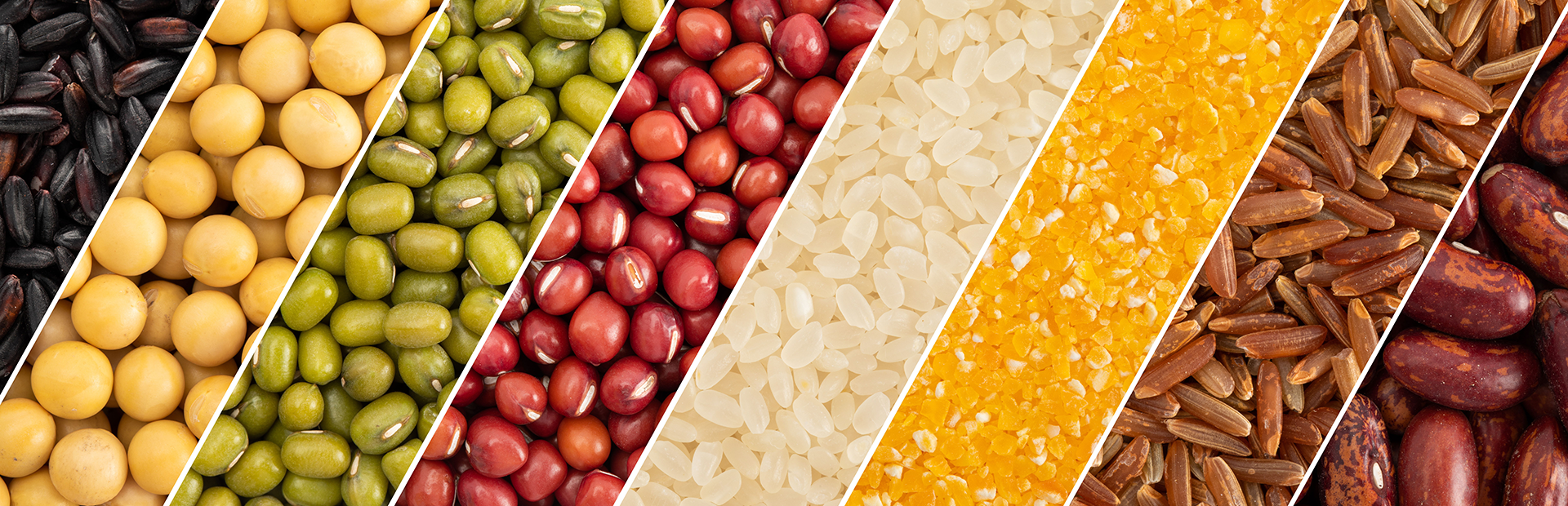
As classificadoras ópticas não servem apenas para arroz. Elas são a solução padrão sempre que pureza e uniformidade são fatores determinantes do valor.
1. Grãos e Cereais
Arroz– Remova grãos quebradiços, quebrados, amarelos ou vermelhos, além de cascalho e pedras.
Trigo e Milho– Inspecionar grãos infectados por micotoxinas, apresentar descoloração e sementes estranhas.
Quinoa, painço, sorgo– Melhorar a qualidade nutricional eliminando sementes imaturas.
2. Nozes e Sementes
Amêndoas, castanhas de caju, amendoins, nozes– Remova cascas, danos causados por insetos e mofo.
Sementes de girassol, sementes de abóbora– Classificação por cor para uniformidade de tamanho e remoção de defeitos
3. Leguminosas
Feijões, lentilhas, grão-de-bico– Eliminar rachaduras, cascas de sementes quebradas e torrões de solo
4. Alimentos processados e reciclagem
Flocos de plástico, lascas de PET– separar por cor e tipo de polímero
Grãos de café– Remova feijões verdes e objetos estranhos.
Frutas secas– Classifique os damascos, as passas e os cranberries de acordo com o grau de escurecimento.


 CN
CN português
 English
 français
 русский
 español
 ไทย
ไทย Indonesia
 Tiếng việt
 العربية
 فارسی
فارسی



 SUPORTADO POR REDE